What Is Artificial Intelligence? A Student-Friendly Guide
A clear student-friendly introduction to artificial intelligence, machine learning, everyday AI and responsible use.
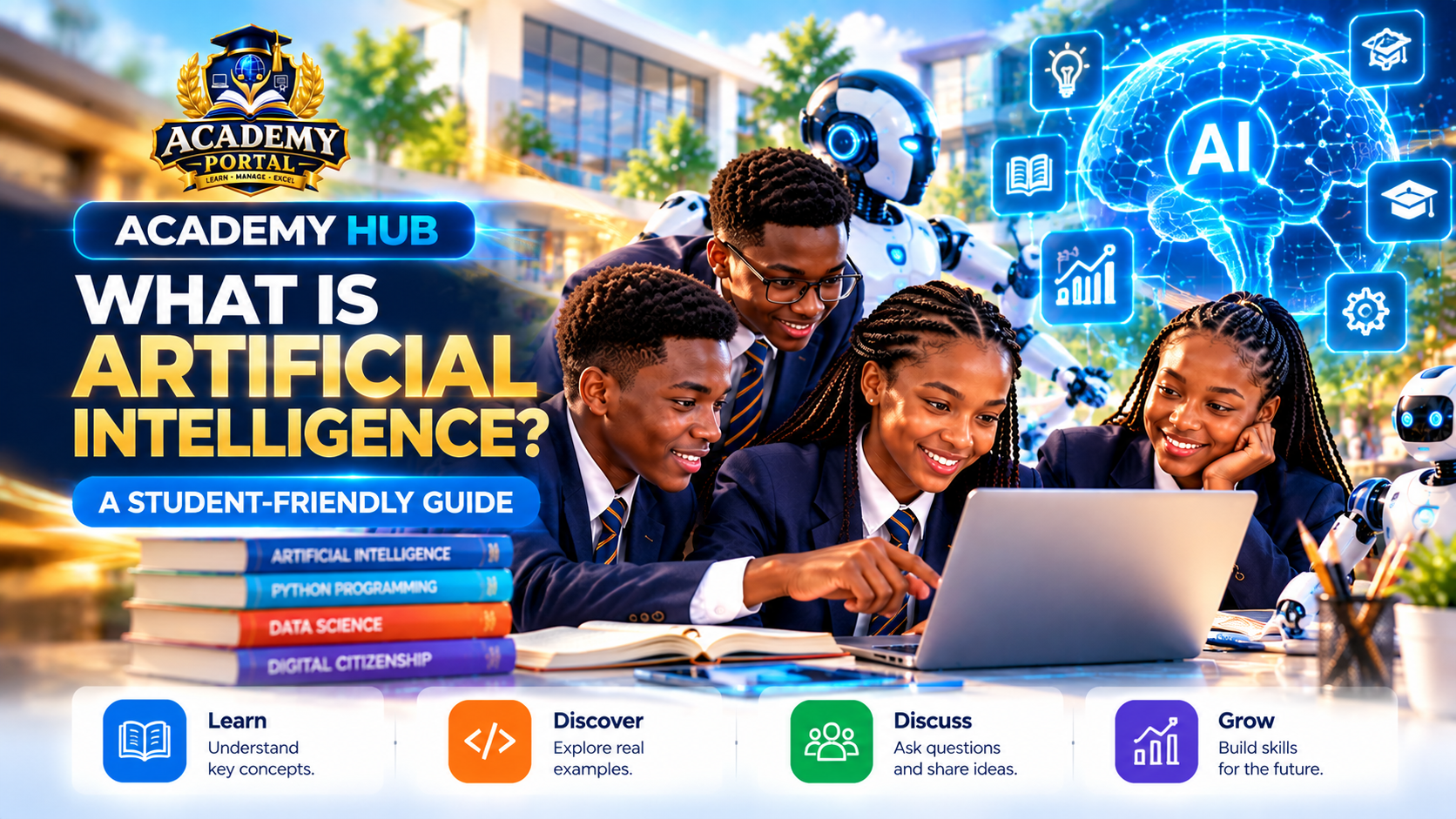
Artificial intelligence, usually called AI, describes computer systems designed to perform tasks involving capabilities such as recognising patterns, working with language, making predictions or generating content.
AI becomes easier to understand when we look at what it does, how models learn patterns from data and where their limitations are.
Where might you meet AI?
You may encounter AI when a device recognises speech, a service recommends content, navigation software estimates a route, software detects unwanted messages, or a generative AI tool produces text or images from instructions.
Not every automated system is AI. A calculator can follow fixed rules, while many modern AI systems use models that identify patterns from examples or data.
AI, machine learning and data
Artificial intelligence is the broad field. Machine learning is one approach within AI in which systems learn patterns from data rather than relying only on individually written rules.
The quality and suitability of data matter. Incomplete, inaccurate or unrepresentative data can contribute to weak or unfair results.
What is generative AI?
Generative AI creates outputs such as text, images, audio or computer code in response to instructions, often called prompts.
A generated answer can be useful without being guaranteed correct. AI can produce inaccurate statements, misunderstand context or present uncertain information confidently. Human judgement remains important.
Five responsible habits for students
1. Think before you trust
Treat AI output as material to evaluate, not automatic truth. Check important facts against reliable sources.
2. Protect private information
Do not enter passwords, confidential school records or sensitive personal information into tools unless their use is explicitly approved and appropriate.
3. Do your own learning
Use technology to support understanding rather than replace the practice that develops your skill.
4. Be transparent
Follow your school's rules about AI-assisted work and acknowledge use when required.
5. Question bias and limitations
Ask what information might be missing, whether a result could disadvantage some people and whether reliable sources support it.
A useful way to work with AI
If you are learning photosynthesis, you might use AI to request a simpler explanation, generate practice questions or compare your own explanation with key concepts. Then verify important points using your textbook, teacher or trusted learning resources.
The student remains responsible for the learning.
Try this
Choose one everyday digital service that you think may use AI. Write down the task AI might perform, what data it may need, one benefit, one limitation and how a human should remain involved.
Academy Hub takeaway: Learn what AI can do, understand what it cannot guarantee, protect your information and keep human judgement at the centre.
Keep building on what you've learned.
Discover more practical technology, science, digital skills and learning resources across Academy Hub.